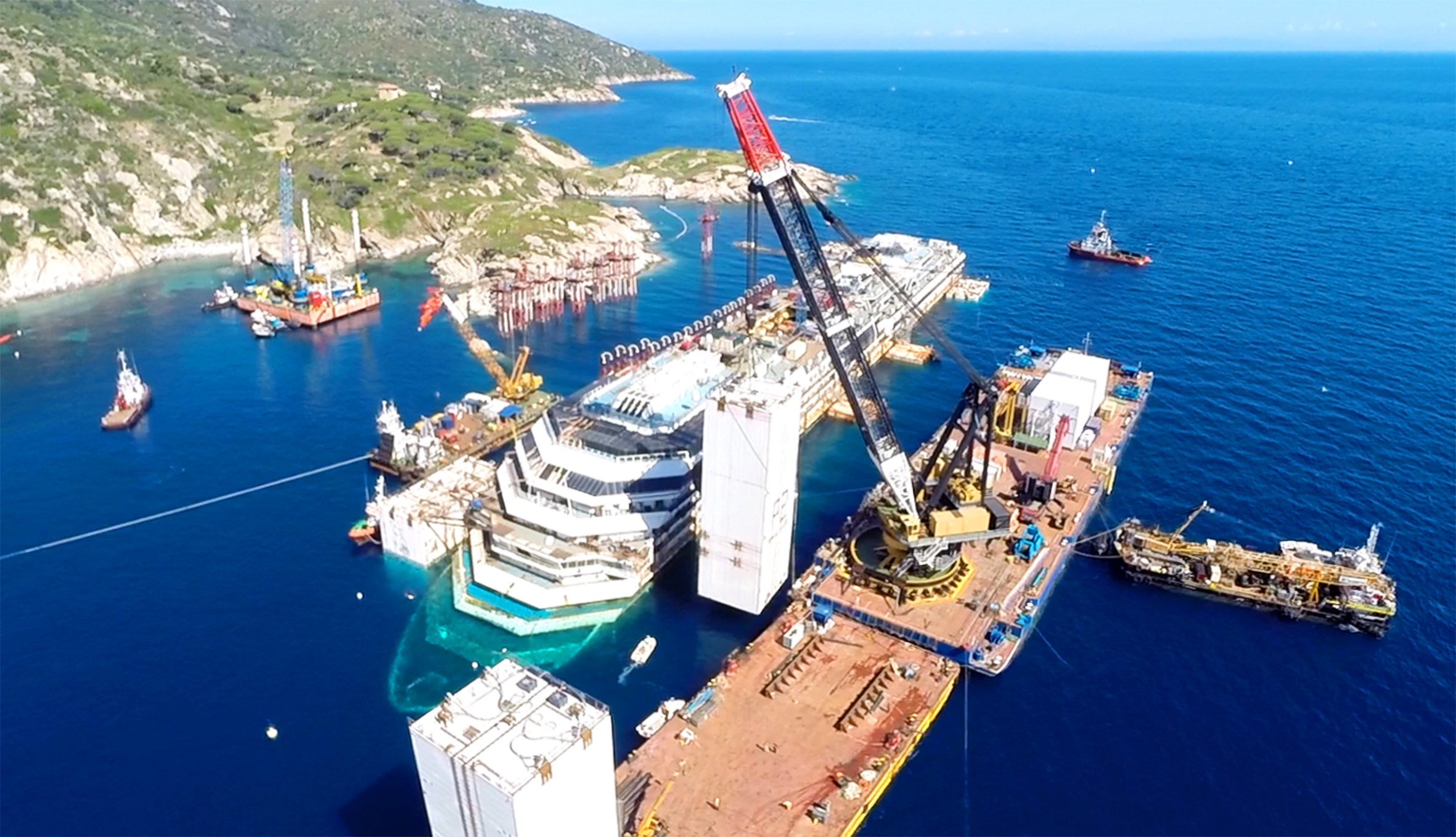
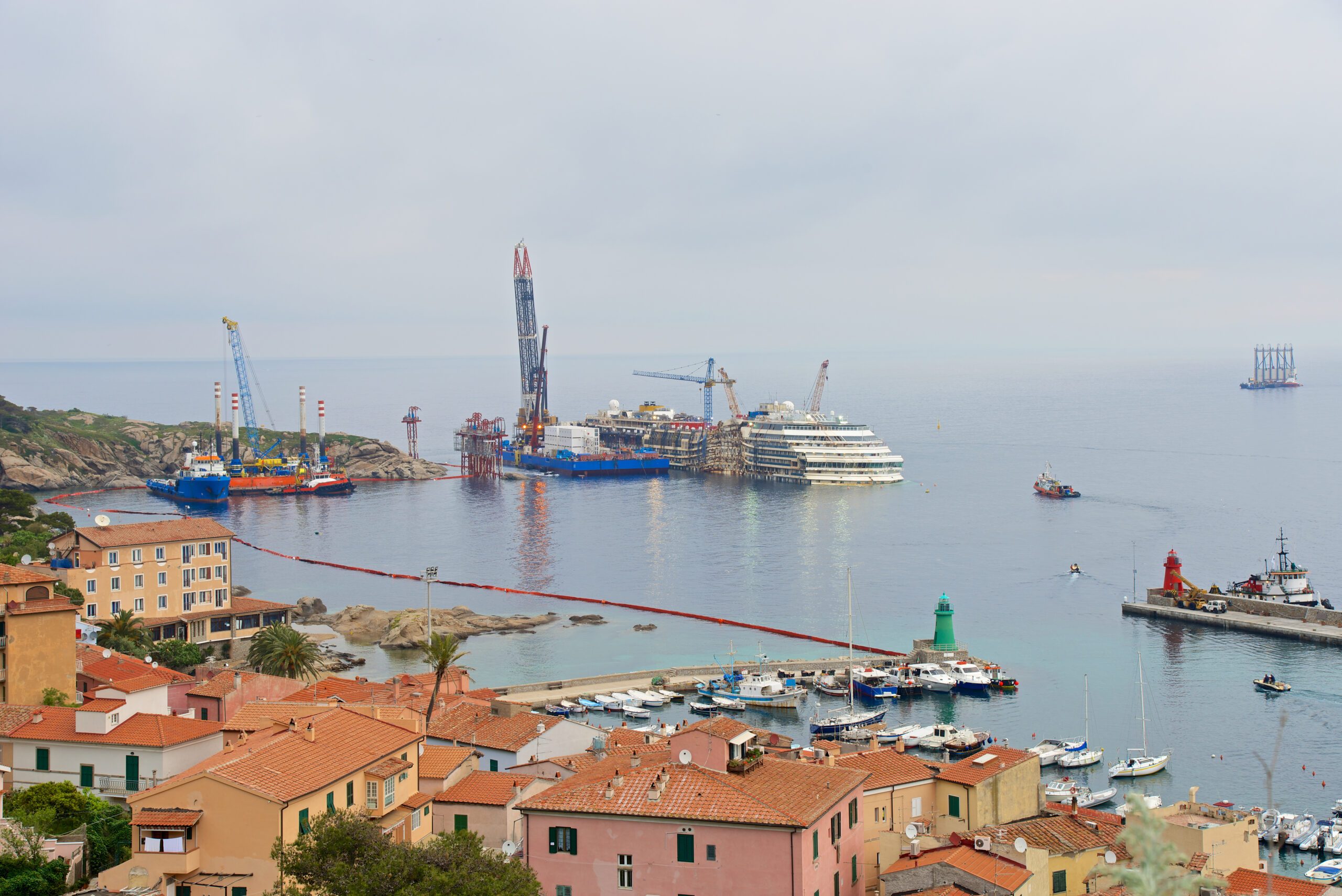
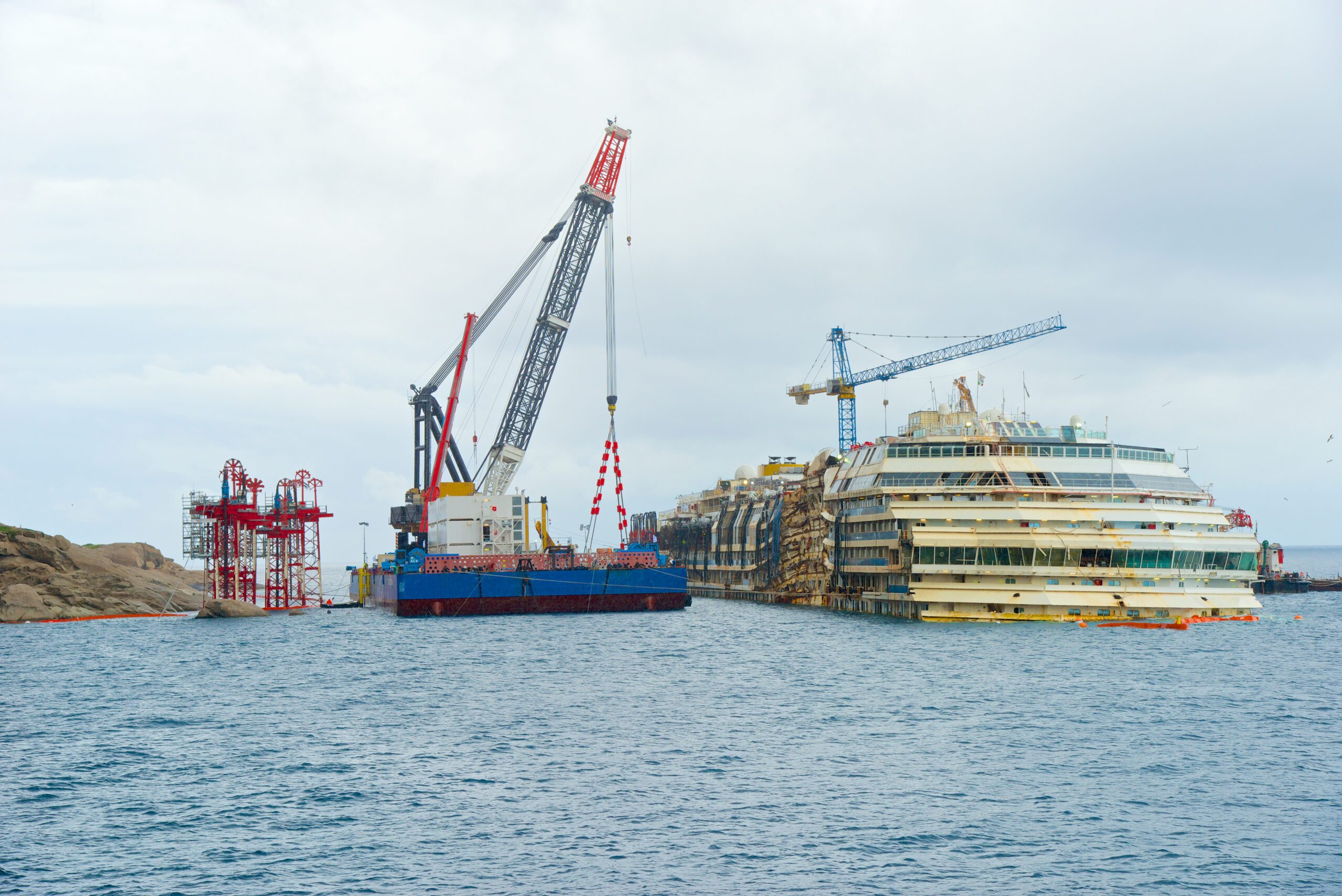
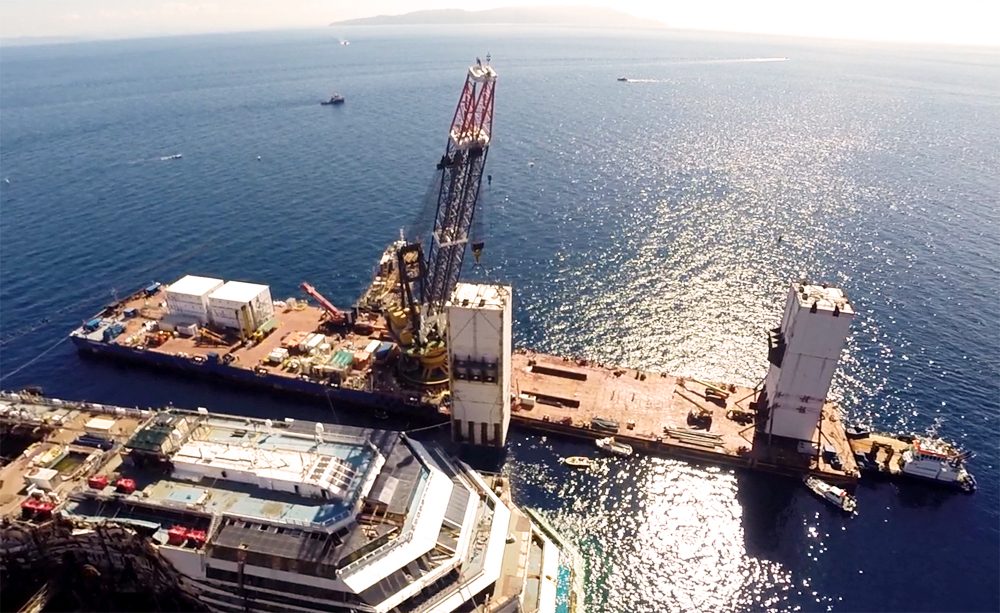
One of the cranebarges brought in to perform vital lifting work installing sponsons – giant tanks to help refloat the vessel – was the Conquest MB1.The sophisticated rotating/ luffing crane was tasked with lifting 21 sponsons into position on the ship’s sides – 17 on the starboard side and four on the port side – after the ship had already been successfully parbuckled ( uprighted ).
The Conquest MB1 was the best tool for the job, and contributed to the success of the Costa Concordia re-float operation.
– Nick Sloane – Salvage Master Costa Concordia
The sponsons, the heaviest of which was 850 t, were filled with seawater and then pumped empty during the refloating operation to lift the vessel.
The Costa Concordia was officially declared a constructive total loss by the cruiseline. The Costa Concordia salvage job, as a total project with the lifting and installation of the sponsons up to 850 t, with no recorded downtime is extraordinary for a newly-designed crane. We are very proud that we were able to contribute to one of the biggest maritime salvage projects known to date.